STP's waste bags
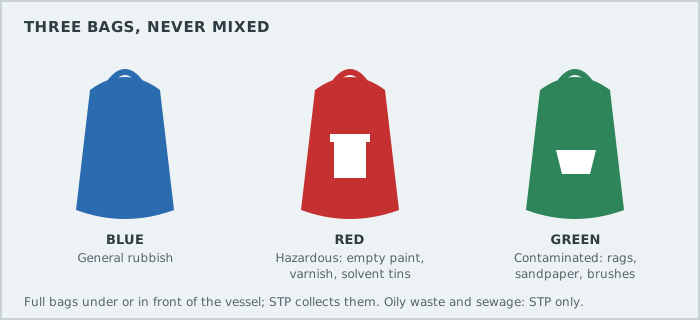
- Blue: general rubbish.
- Red: hazardous waste — empty paint, varnish, lacquer or solvent tins.
- Green: contaminated waste — absorbents, brushes, sandpaper, rags.
Put full bags under the vessel, or in front of it at a mooring. STP collects them. Never mix waste, and never throw it straight into the containers.
Bigger waste
- Oils, solvents, batteries, wood, appliances: ask STP for big bags, pallets, tanks or skips.
- MARPOL I (oily waste) and MARPOL IV (sewage) are collected only by STP.
- Flares and pyrotechnics: hand them to STP's environmental staff at the recycling point. Never bin or abandon them.
Keeping the sea clean
- No draining tanks or bilges, afloat or ashore. Ask STP for the means.
- Sanding, blasting or anything that makes dust: local extraction, the vessel covered, and a clean-up every day.
- Painting afloat: a full anti-pollution barrier around the vessel. Spray or particles need an enclosure with filtered extraction.
- No refuelling without STP's authorisation and fire and spill precautions.
- Nothing into the sea, the drains or onto the ground: paint, oil, solvents, plastics, rubbish.
NOTE — End of the day Leave your work area clean and swept.